
It’s the first question almost everyone asks: composite or timber? There’s no single right answer. It comes down to how your deck will be used, how it’ll look against your home, and how much weekend maintenance you’re honestly up for.
Here’s how the two stack up across every dimension that actually matters.
Looks: character versus consistency
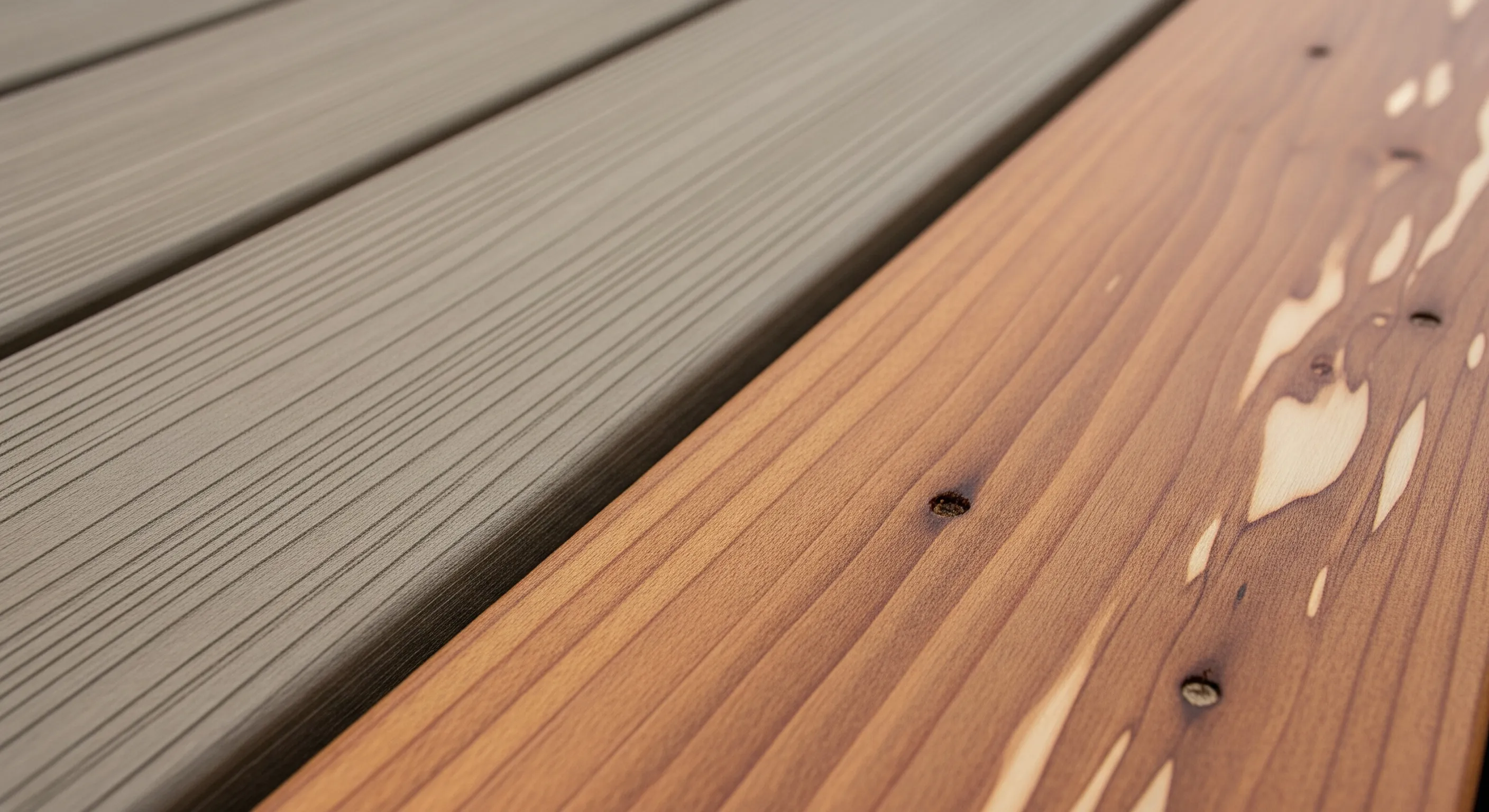
Hardwood like spotted gum and merbau has depth, natural grain variation and a warmth that composite manufacturers have spent years trying to replicate. Every board is slightly different. That variation is exactly what some people love and exactly what others find stressful when boards age unevenly.
Spotted gum is one of the most beautiful native timbers available. Its interlocked grain produces a chatoyant shimmer in raking light, and it weathers to a silver-grey if left unoiled (a look many people actively choose). Fresh oiling brings the warm honey tones back.
Merbau runs darker with a more consistent reddish-brown tone. It’s denser grained and slightly more uniform than spotted gum, which suits people who want timber’s warmth without as much character variation.
Composite has improved dramatically. The best boards now use embossed grain textures and multi-tone colouring to mimic timber, and from a few metres away the resemblance is convincing. Up close, and especially as composite ages, the difference becomes more obvious: the surface stays consistent rather than developing the depth and patina that timber acquires.
Verdict: timber wins on character and authenticity; composite wins on uniformity and predictability.
Durability and lifespan
Both materials can last decades with correct installation and care. The failure modes are different.
Hardwood is structurally robust from the start. Dense species like spotted gum and merbau are naturally resistant to rot, insect attack and surface wear. A well-maintained hardwood deck can be in service for 25 years or more; neglected decks (no finish, pooling water, leaf litter sitting in gaps) can degrade far sooner. The timber is repairable: a damaged board can be replaced, and a worn surface can be brought back to life by sanding and re-oiling.
Composite is engineered to resist rot and insect attack without any maintenance coating. The core structure holds up well over time, and most reputable products carry long manufacturer warranties. The surface, however, is not repairable the same way timber is. Scratches and gouges sit in the surface permanently; boards that fade unevenly generally cannot be sanded back. Replacement is the only remedy.
Both materials need a correctly designed and constructed subframe. No decking board, regardless of what it’s made from, performs well on a subframe that holds moisture or flexes excessively. The structural rules in AS 1684 and AS 1657 govern how frames must be designed and constructed; a properly built frame is the foundation for either material.
Maintenance reality
This is where most people’s minds are made up.
Composite maintenance
Composite decking is designed to need very little. A periodic wash with a hose or low-pressure washer removes dirt, algae and tannin stains (from overhanging trees). Some board types have textured surfaces that can trap fine debris and benefit from a stiff brush once or twice a year. That’s largely it.
No oiling. No sanding. No annual commitment.
Hardwood maintenance
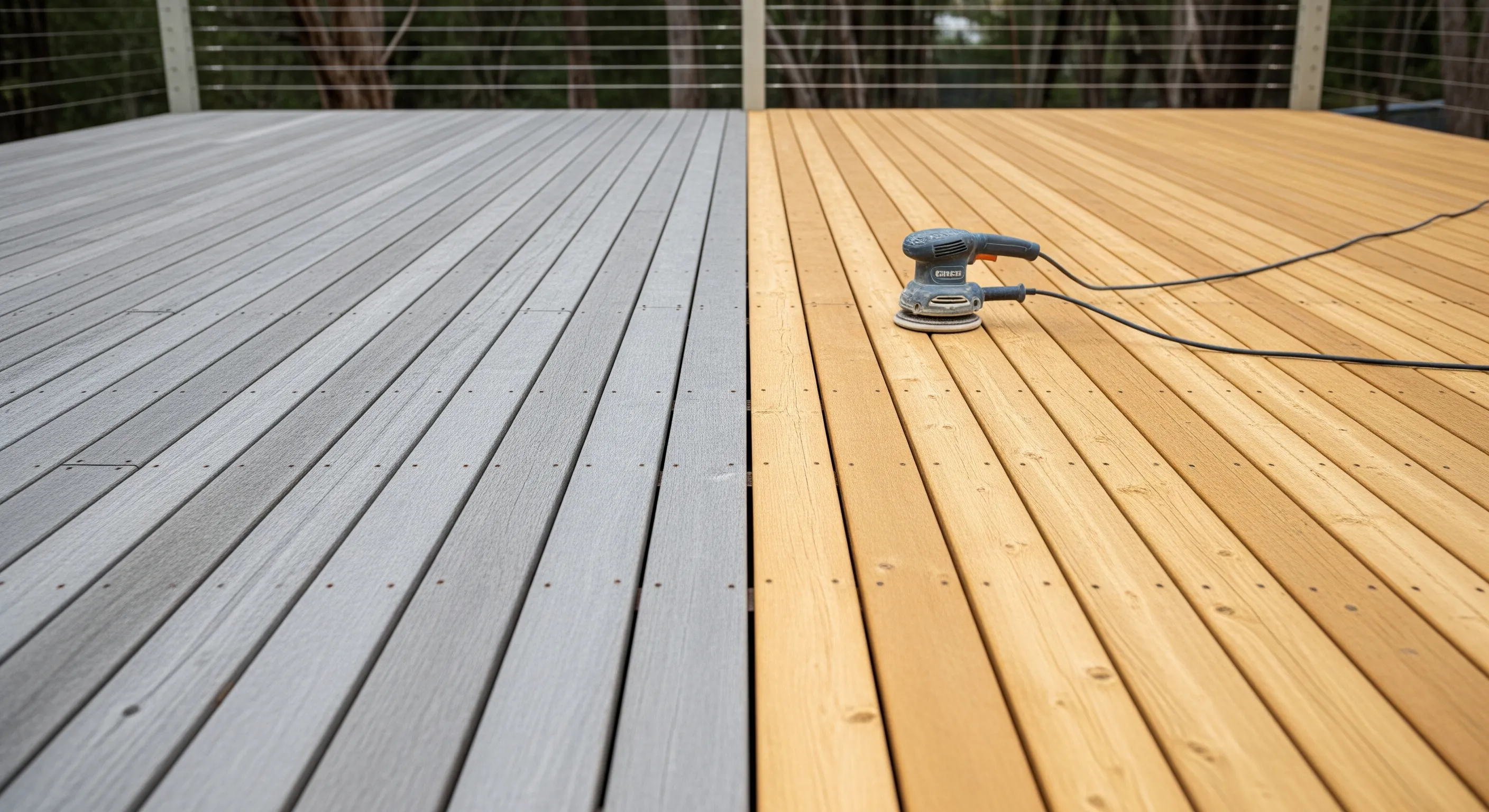
Hardwood requires an active maintenance relationship. A freshly installed and oiled deck looks exceptional, but the finish breaks down under UV and rain. Without top-up oiling, the timber dries out, checks (small surface cracks) appear and the colour fades.
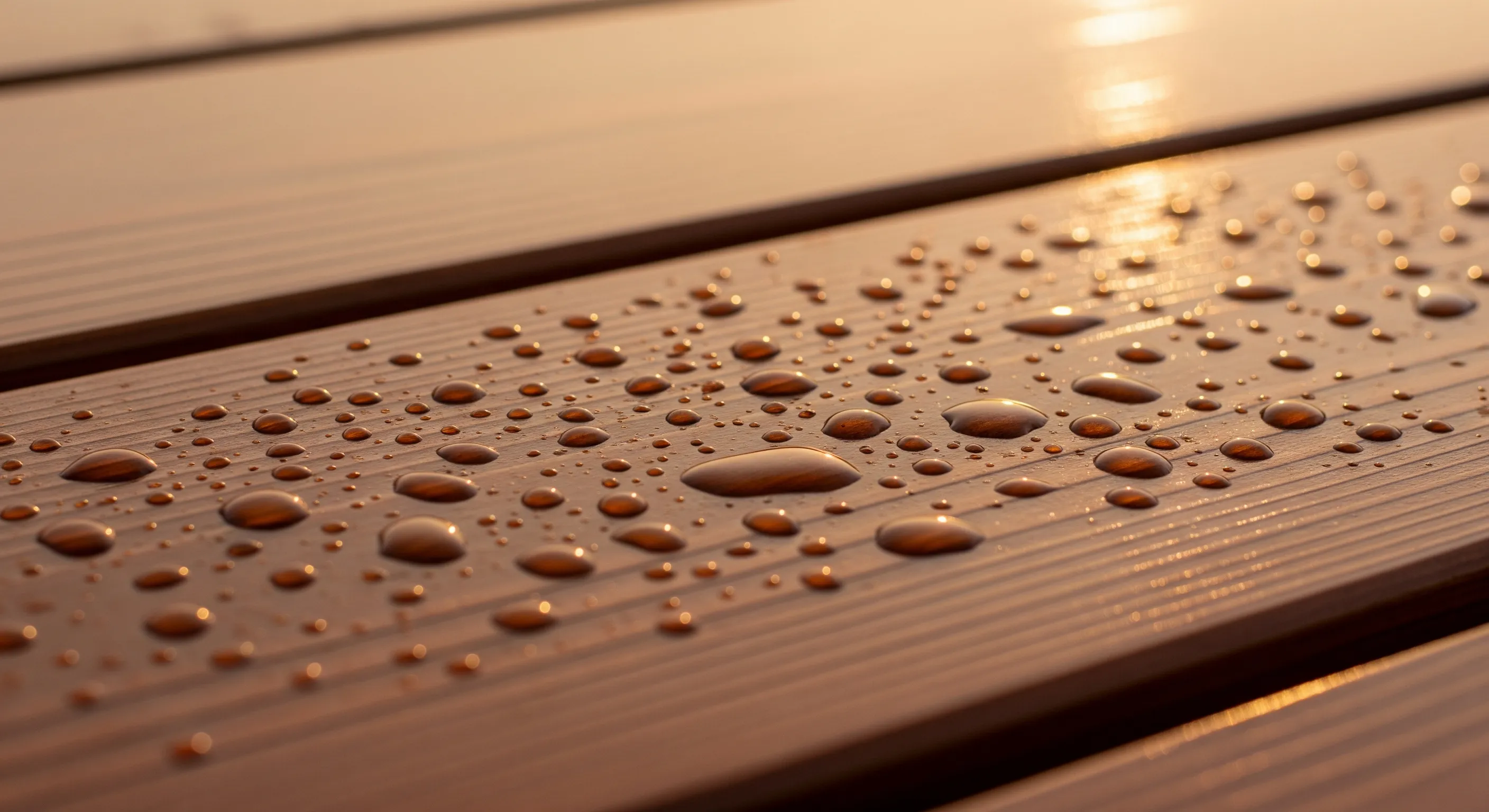
The honest schedule: a quality decking oil applied at least once a year in a high-UV climate, with the specific interval depending on board exposure, aspect and the oil used. Every few years the deck benefits from a light sand before re-oiling to remove grey oxidised timber and restore a fresh surface.
If you’re genuinely going to do that maintenance (or budget for a professional to do it), hardwood rewards you. If the maintenance keeps slipping, the gap in condition between a well-kept composite deck and a neglected timber one becomes stark.
Read more in how often should you oil a deck? and how to restore an old timber deck.
Cost over time
Neither material is simply “cheaper.” The comparison depends on which costs you count.
Composite typically has a higher upfront supply and installation cost. Ongoing costs are minimal: periodic cleaning only. Spread across the board’s service life, the annual cost is often lower than people expect when they first see the price.
Hardwood can have a lower upfront cost depending on species and market conditions, but that figure doesn’t include oil, sanding equipment, or labour if you’re paying someone to maintain it. Add those over the full lifespan of the deck and the gap between the two options narrows considerably.
The honest framing: compare the total cost over the full expected lifespan of each material, not just the initial invoice. Use our material quantity calculator to get accurate board quantities for your project, then factor in your maintenance intentions.
(Specific price guidance is TBC and market-dependent. See pricing for indicative ranges.)
Unsure which material suits your site and your budget? We work through this with every client before a single board is quoted. Get a free quote.
Heat underfoot in full sun
This is a genuine practical consideration, especially in Australian summers.
Composite boards in dark colours can become notably hot underfoot in direct sun. The degree varies by colour (lighter boards are cooler), board composition and whether the board has a hollow or solid core. If your deck faces north or west and gets unshaded afternoon sun, heat underfoot should be part of your product selection conversation. Ask specifically about surface temperature performance before committing.
Hardwood in full sun also gets warm, but timber’s thermal properties generally make it less extreme than dark composite boards in the same conditions. Lighter-coloured timber species and a fresh oil coat help reflect rather than absorb heat.
If barefoot summer use is a priority, factor this in: lighter colours in either material help, and if you’re buying composite, request heat performance data from the supplier.
Slip resistance and safety
Slip resistance matters on any outdoor surface, particularly around pools, in shaded areas prone to algae, and in households with children or older adults.
Hardwood has a naturally textured surface when freshly milled. As the surface weathers and the grain opens slightly, grip generally improves. Oiled surfaces are not slippery when correctly applied. A deck that has been allowed to develop an algae or mould bloom is slippery regardless of material.
Composite boards vary widely. Some have deep embossed textures specifically to improve wet-weather grip; others have smooth surfaces that can become slippery when wet or colonised by algae. Check the wet slip-resistance rating (typically expressed as a P-rating under Australian standards) when comparing products. A P4 or P5 rating is appropriate for barefoot outdoor use in wet conditions.
Both materials can be cleaned to remove algae growth, and both should be: a neglected surface is a hazard on a timber or composite deck alike.
Sustainability and sourcing
This question deserves an honest answer rather than a marketing one.
Australian hardwoods from certified, responsibly managed sources carry a strong environmental case. Spotted gum and merbau sourced from verified sustainable operations can have a lower embodied carbon footprint than manufactured composite products. The key word is “verified”: look for FSC or PEFC certification, or timbers sourced under state-managed sustainable forestry schemes.
Composite is often marketed as sustainable because many products incorporate recycled plastic content (recovered from landfill streams). That’s genuinely useful material diversion. The counterpoint: most composite boards are not themselves recyclable at end of life, and the manufacturing process is energy-intensive. Longevity and not needing to be replaced as often as poorly maintained timber can offset this over time.
Neither material has a simple “winner” on sustainability. The most sustainable deck is one that is correctly specified, properly built and actively maintained, regardless of material.
Performance in coastal and high-UV climates
Australian conditions are demanding: high UV radiation, salt air near the coast, wide seasonal temperature swings and regular heavy rain.
Composite handles salt air well and doesn’t need a surface coating to resist it. UV resistance varies by product; check whether the colour is through-body or a surface coating, as surface coatings can fade or chalk under prolonged UV exposure.
Hardwood manages coastal conditions effectively when the finish is maintained. Salt deposits on a dry, unprotected surface accelerate checking and greyness; regular oiling keeps the surface sealed and the timber stable. Species density matters here: denser species like spotted gum perform better than softer timbers in exposed coastal conditions.
For both materials, design and drainage are as important as material choice. A deck with good drainage, correct board spacing and a dry subframe outperforms a poorly drained deck regardless of what the boards are made from. See choosing decking timber for more on how to match species to exposure conditions.
Feel and longevity under foot
Timber has a quality that’s difficult to articulate: the way it flexes very slightly underfoot, the warmth it holds in morning sun, the feel of real grain texture. These things are noticed more in retrospect, when comparing a well-loved timber deck to its replacement, than in a showroom.
Composite is firmer underfoot (especially capped composite), which some people prefer. The consistency is its own virtue: it won’t check, won’t silver, won’t need attention to keep looking the same as the day it was installed.
Both are legitimate choices. The preference is genuinely personal.
So which one?
Here’s how to make the call:
Choose composite if:
- You want the lowest possible ongoing maintenance commitment.
- You prefer a consistent, predictable appearance that won’t change with the seasons.
- Your deck is in heavy, difficult-to-access shade where algae would be a persistent problem on timber.
- You’re installing around a pool where frequent wet surfaces are the norm.
Choose hardwood if:
- The look and feel of real Australian timber is important to you.
- You’re prepared to commit to a maintenance schedule (or budget for it).
- You want a surface that can be sanded and restored rather than replaced.
- Environmental provenance of the material matters and you can verify sustainable sourcing.
Still not sure? Run your quantities through the material quantity calculator, read how to choose decking timber for species-level detail, then talk to us about your project. The right answer usually becomes obvious once we know how the deck will be used, who’ll be using it and what’s already on the house.
Thinking about your own deck? See our decking services or get a free quote.